

When it comes to brewing coffee, the method you choose can make a big difference in flavor, texture, and convenience. Whether you prefer a bold, full-bodied cup or a clean, bright brew, there’s a method that fits your taste and lifestyle. Here’s a quick breakdown:
- French Press: Rich, textured coffee with natural oils; great for beginners and group servings.
- AeroPress: Quick, single servings with a clean, smooth finish; portable and easy to clean.
- Moka Pot: Strong, concentrated coffee with bold flavors; requires attention to heat control.
- Drip Coffee: Convenient for large batches; produces a balanced, clarified cup.
- Espresso: Intense, concentrated shots with a syrupy body; requires advanced skills and equipment.
Each method varies in cost, skill level, and brew time, so your choice depends on what matters most to you - flavor, speed, or simplicity.
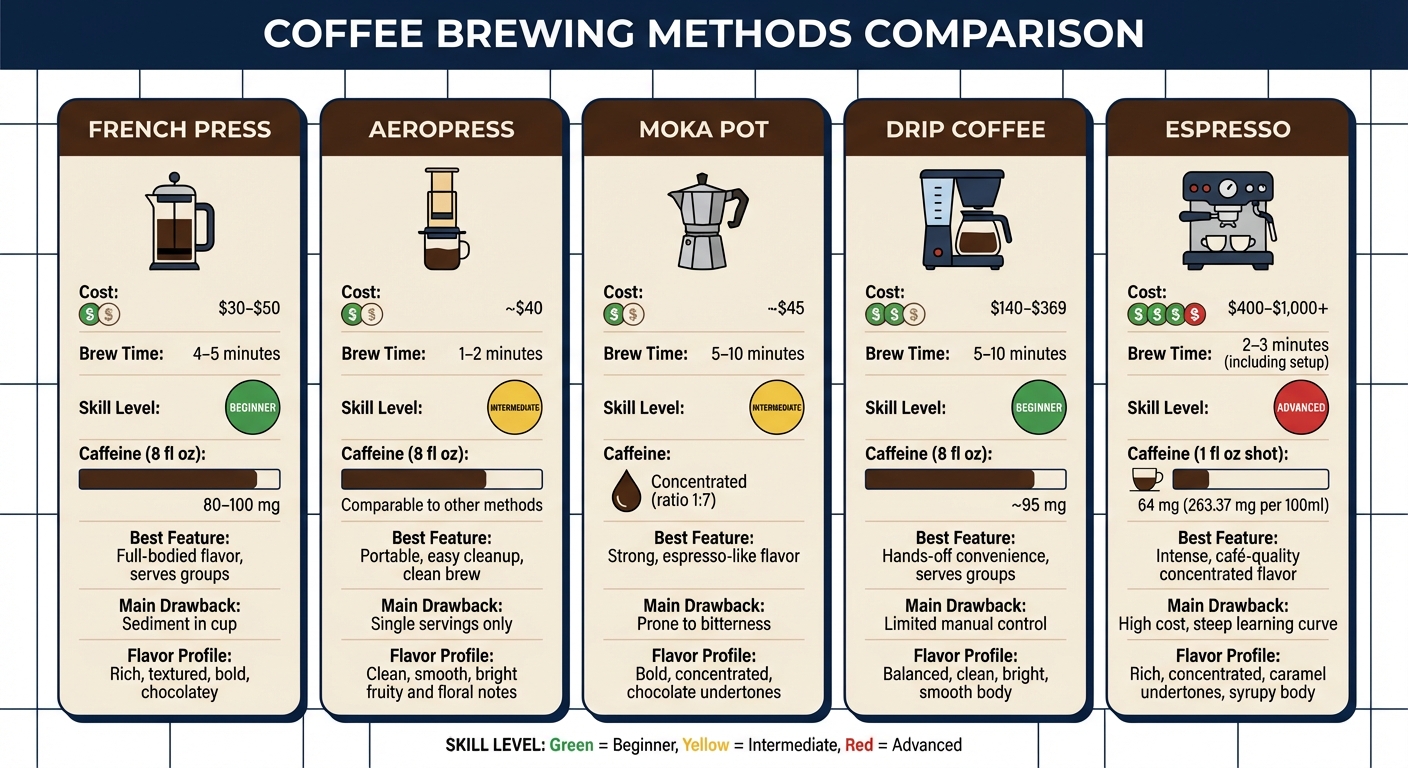
Coffee Brewing Methods Comparison: Cost, Time, Skill Level and Features
French Press vs AeroPress vs Pour-over and More: Coffee Methods Compared
Quick Comparison
| Method | Cost | Brew Time | Skill Level | Key Feature | Drawback |
|---|---|---|---|---|---|
| French Press | $30–$50 | 4–5 min | Beginner | Full-bodied flavor | Sediment in cup |
| AeroPress | ~$40 | 1–2 min | Intermediate | Portable, clean brew | Single servings only |
| Moka Pot | ~$45 | 5–10 min | Intermediate | Strong, bold coffee | Prone to bitterness |
| Drip Coffee | $140–$369 | 5–10 min | Beginner | Convenient for groups | Limited manual control |
| Espresso | $400–$1,000+ | 2–3 min | Advanced | Café-quality concentrated flavor | High cost, steep learning curve |
No matter which method you choose, investing in a quality burr grinder and fresh beans can elevate your coffee experience. Let’s dive into the details of each brewing method to help you find your perfect match.
1. French Press
The French press is known for delivering a rich, full-bodied coffee with a creamy texture. Its unique metal mesh filter allows natural oils and fine coffee particles to pass through, resulting in a bold, chocolatey, and robust flavor. This brewing method shines with medium to dark roasts that highlight these deep, roasty notes.
Flavor Profile
The French press uses full immersion brewing, ensuring consistent extraction. Unlike paper filters, which trap oils, the metal mesh lets lipids remain in the cup. As Asser Christensen, a Licensed Q Arabica Grader at The Coffee Chronicler, explains:
"The French press relies on a mesh filtration screen, which allows a lot of lipids to enter the cup. This makes it less vibrant and clean flavor-wise, but you do get more of that oomph that so many people crave".
This method creates a heavier, more textured brew compared to the bright and nuanced flavors of pour-over or the lighter body of drip coffee.
Caffeine Content
An 8 fl oz (240 ml) serving of French press coffee contains about 80–100 mg of caffeine. While espresso has more caffeine per ounce, French press coffee often delivers a higher total caffeine content due to its larger serving size.
Brew Time
The standard brew time for a French press is 4 minutes, but some coffee enthusiasts suggest extending it to 6–8 minutes when using a very coarse grind to bring out deeper sweetness. Stir gently about 30–45 seconds into brewing, and make sure to decant the coffee immediately to prevent over-extraction.
Skill Level
The French press is considered beginner-friendly due to its forgiving nature. As Clive Coffee puts it:
"It's the easiest method to brew delicious coffee and the most challenging method to mess up".
You won’t need any specialized tools like a gooseneck kettle or precise pouring techniques. Just use a coarse grind resembling sea salt or raw sugar. If the plunger feels too hard to push, the grind is too fine; if there’s no resistance, it’s too coarse. Also, stick to wooden or plastic spoons for stirring to avoid damaging the glass carafe.
With its straightforward process and rich, satisfying flavor, the French press is an excellent starting point for anyone looking to explore the world of coffee brewing techniques.
2. AeroPress
The AeroPress is a go-to choice for coffee lovers seeking a clean, sediment-free cup. Its paper micro-filter ensures no grit makes its way into your brew, delivering a cup with lower acidity and reduced bitterness.
Flavor Profile
This brewing method combines immersion brewing and air pressure to create a unique extraction process. With 0.5 to 1 bar of pressure - far beyond the 0.008 bar typical of pour-over methods - the AeroPress produces a rich, smooth concentrate with bright fruity and floral notes.
As Blue Bottle Coffee puts it:
"AeroPress is the Swiss army knife of brew methods. We love it for its versatility - this is a method that welcomes improvisation - and its mouthfeel, which is delicate and silky."
The flavor profile can be tailored to your liking by experimenting with filters. For a clean, light-bodied cup, layer two or three paper filters. Prefer a heavier, oil-rich brew? Opt for a metal filter. Adjusting water temperature also makes a big difference: go hotter (up to 212°F) for light roasts to enhance acidity and sweetness, or lower it to 176–185°F for darker roasts to keep bitterness in check. These tweaks can even impact your caffeine experience.
Caffeine Content
An 8 fl oz (240 ml) serving brewed with an AeroPress offers a caffeine kick comparable to other methods. The exact amount depends on your coffee-to-water ratio and brew time. Designed to brew between 6–10 oz per session, the AeroPress is perfect for single servings.
Brew Time
The AeroPress is incredibly quick. Most recipes take just 1–2 minutes from start to finish, with the standard brew time clocking in at about 60 seconds. Including preparation and cleanup, you’re looking at under two minutes total. This makes it an excellent choice for busy mornings when you need great coffee fast. While advanced users might experiment with longer steep times, the standard 60-second brew consistently delivers excellent results.
Skill Level
While rated as intermediate, the AeroPress is beginner-friendly and forgiving. Coffee expert Afruz Fatullazada shares:
"It's also incredibly forgiving; it's honestly hard to make a bad cup."
Thanks to its immersion-based brewing, it’s less sensitive to grind size errors compared to pour-over methods. A fine-to-medium grind (think table salt) works best, and applying steady, gentle pressure is key. Cleanup is a breeze: simply eject the dry "puck" of used grounds with the plunger and give the device a quick rinse.
With over 75,000 five-star reviews across 70 countries, the AeroPress has proven its popularity. Models range from the AeroPress Original at $39.95 to the AeroPress XL at $79.95, and its durable plastic design makes it a reliable companion for travel and outdoor adventures.
3. Moka Pot
The Moka Pot, a classic invention by Alfonso Bialetti in 1933, is famous for brewing bold, concentrated coffee. Often called "stovetop espresso", it uses steam pressure to push hot water through finely ground coffee. The metal filter allows oils and fine particles to pass through, resulting in a rich, textured brew that works beautifully for lattes and cappuccinos.
Flavor Profile
The Moka Pot delivers a concentrated coffee with deep chocolate undertones and a rich, robust texture. While it doesn’t quite match the pressure of commercial espresso machines, it offers a flavor experience that sits between a pour-over and a true espresso shot. With a coffee-to-water ratio of about 1:7, it creates a strong, intense brew perfect for those who enjoy bold flavors. Medium to dark roasts perform best, emphasizing roasty and caramelized notes.
Brew Time
Brewing takes about 5–10 minutes. To avoid any metallic taste, preheat the water in the bottom chamber before brewing. Listen for the signature hissing sound - that’s your cue to remove the pot from the heat immediately. Some users recommend running cold water over the base to stop the extraction process quickly and prevent bitterness.
Skill Level
The Moka Pot is easy to use, making it a great option for beginners, though it does require some attention to heat control. Use a fine grind (similar to table salt), fill the funnel basket without tamping, and keep the heat at a low to medium setting. Timing is crucial - remove it from the burner as soon as you hear the gurgling sound to avoid burnt or overly bitter coffee. Models like the Bialetti Express provide excellent quality at a price similar to an AeroPress, with plenty of budget-friendly options available. Just a heads-up: aluminum models should never go in the dishwasher, as it can cause oxidation. This straightforward yet precise brewing method makes the Moka Pot a standout choice for coffee enthusiasts.
sbb-itb-ed7145d
4. Drip Coffee
The drip coffee maker has earned its place as a fixture in many American kitchens, offering a reliable way to brew coffee with minimal effort. Using gravity, hot water flows through medium-ground coffee and a paper filter, producing a clean and bright cup. It's especially handy for households that need multiple servings in one go, as most machines can brew anywhere from 3 to 12 cups per cycle. This ease of use makes it a go-to option for daily coffee drinkers.
Flavor Profile
Drip coffee delivers a balanced and clean taste with a smooth body and a touch of brightness. Thanks to the paper filter, oils and fine particles are filtered out, resulting in a clarified brew compared to methods like the French Press. For the best results, aim for 1–2 tablespoons of coffee per 6 fl oz of water and a brewing time of about 5 minutes. A medium grind, similar to the texture of sea salt, helps ensure proper extraction.
Caffeine Content
Though espresso packs more caffeine per ounce, drip coffee typically contains more caffeine per serving due to its larger volume. An 8 fl oz cup of drip coffee has about 95 mg of caffeine, making it a great choice for a morning energy boost.
Brew Time
Drip coffee makers are champions of convenience, completing a brewing cycle in roughly 5 to 8 minutes. Simply add water and coffee grounds, press a button, and let the machine handle the rest.
Skill Level
Drip coffee is ideal for beginners since it requires no special techniques - just the machine and some basic ingredients. That said, the quality of your machine can make a difference. Cheaper models may not reach the optimal brewing temperature of 195–205°F, which can lead to sour or under-extracted coffee. To avoid this, consider investing in a model certified by the Specialty Coffee Association (SCA), like the Technivorm Moccamaster or Ratio Six. Regular maintenance is also essential - descale your machine every 3 to 6 months to remove mineral buildup and keep residual coffee oils from affecting the flavor. Up next, we’ll dive into the bold world of espresso and its concentrated appeal.
5. Espresso
Among the many brewing methods, espresso stands out as the most concentrated and intense. By using 9 bars of pressure to push water through finely ground coffee in just 25–30 seconds, espresso creates a bold, full-bodied shot topped with a layer of golden crema . As Counter Culture Coffee describes it:
"Espresso is a great way to amplify the characteristics of your favorite coffee. Think of it as coffee under a microscope."
This process not only enhances the flavors of the coffee but also provides a unique tasting experience, as explored below.
Flavor Profile
Espresso boasts a rich, concentrated flavor with caramel undertones and a syrupy body that's far heavier than drip or pour-over coffee . The high-pressure extraction intensifies the coffee's natural characteristics - bright notes become more vibrant, and sweet flavors are heightened . To achieve the perfect shot, use a very fine grind (similar to powdered sugar) and aim for a 2:1 water-to-coffee ratio, such as 18g of coffee to 36g of liquid . A thick, dark crema signals fresh grounds, while a thin or absent crema may indicate stale beans.
Caffeine Content
Despite its strong flavor, a single 1 fl oz shot of espresso contains about 64 mg of caffeine - less than the 95 mg found in an 8 fl oz cup of drip coffee . However, espresso has the highest caffeine concentration per milliliter, with 263.37 mg per 100 ml. The small serving size, though, means you're consuming less caffeine overall. For comparison, a Starbucks shot contains 75 mg, while Dunkin' delivers 118 mg in their 1.5 fl oz shot. To stay within the FDA's recommendation of under 400 mg of caffeine daily, you can safely enjoy about 5–6 shots.
Brew Time
While the extraction itself is quick, the process also requires time for grinding, tamping, and heating the machine. For the best results, ensure your water temperature is between 195–205°F .
Skill Level
Espresso demands precision and practice, making it the most challenging brewing method to master . You'll need to fine-tune variables like grind size, tamping pressure, and extraction time. If your shot tastes salty or sour, the grind is likely too coarse; if it tastes bitter or burnt, it's probably too fine. Essential tools include an espresso-specific burr grinder and a quality machine . Sarah Elisabeth Huggins, co-owner of Daughter, highlights this complexity:
"Of all the popular coffee brewing methods, espresso takes the crown for being the most finicky."
Regular maintenance of your equipment is non-negotiable since espresso machines are delicate and can break down without proper care.
Pros and Cons
Here's a quick comparison of the standout features and limitations of each brewing method.
The French Press is perfect for making rich, full-bodied coffee in larger quantities. However, it does leave some sediment in your cup, which might not appeal to everyone .
The AeroPress shines when it comes to portability and easy cleanup. It brews a clean, filtered cup or a concentrated coffee in just 1–2 minutes. The drawback? It's designed for single servings, so it's not ideal for serving multiple people .
If you're after strong coffee without splurging on an espresso machine, the Moka Pot is a solid stovetop option, typically priced around $45. Just keep in mind that managing heat is crucial to avoid bitterness .
For ultimate convenience, Drip Coffee is hard to beat. Just add water and coffee grounds, and let the machine do the rest. High-end models, especially those certified by the SCA, can produce results that rival pour-over quality while serving larger groups . The downside? You lose the hands-on control over the brewing process.
Espresso, on the other hand, offers the most intense and complex flavors, but it comes with a steep learning curve and a hefty price tag. Entry-level machines start at $400 and can go well beyond $1,000, and you'll also need a top-notch grinder. Asser Christensen, a Licensed Q Arabica Grader, puts it bluntly:
"Espresso at home just isn't worth the effort, unless you're looking for a new all-consuming hobby".
| Method | Cost | Brew Time | Skill Level | Best Feature | Main Drawback |
|---|---|---|---|---|---|
| French Press | $30–$50 | 4–5 min | Beginner | Serves groups; rich body | Sediment in cup |
| AeroPress | ~$40 | 1–2 min | Intermediate | Portable; easy cleanup | Single servings only |
| Moka Pot | ~$45 | 5–10 min | Intermediate | Strong, espresso-like flavor | Prone to bitterness |
| Drip Coffee | $140–$369 | 5–10 min | Beginner | Hands-off convenience | Limited manual control |
| Espresso | $400–$1,000+ | 2–3 min (setup) | Advanced | Intense, café-quality flavor | High cost; requires precision |
Ultimately, the best brewing method depends on your lifestyle, how much coffee you need, and how involved you want to be in the process.
Conclusion
Choosing the right brewing method depends on four main factors: the flavor you enjoy, the time you have, your skill level, and the equipment you're ready to use.
If you love bold, full-bodied coffee with a rich texture, the French Press is a fantastic option. Its metal filter lets natural oils and fine particles stay in your cup, creating a heavier mouthfeel. For a concentrated, espresso-like brew, the Moka Pot uses steam pressure to deliver robust results. On the other hand, the AeroPress produces a clean, smooth cup with bright, fruity, and floral notes, while drip coffee offers a more balanced and clarified flavor. Espresso, the most intense option, delivers a concentrated shot with caramel undertones and a syrupy body.
Time and skill level are also key considerations. Beginners might lean toward the forgiving nature of a French Press or an automatic drip machine - both of which can produce great coffee even if your grind size isn't perfect. The AeroPress, with its quick 1–2 minute brew time, is great for those with a bit more experience. Meanwhile, espresso brewing demands advanced skills and a serious investment in equipment. As Compass Coffee wisely notes:
"The best brewing method is the brewing method that fits in your daily routine and the one you'll actually use to make coffee".
No matter which method you choose, a quality burr grinder is a must. It ensures a consistent grind size, which is crucial for avoiding bitter or sour flavors in your cup.
FAQs
What’s the easiest coffee brewing method for beginners?
If you’re just starting to brew coffee at home, an automatic drip coffee maker is a fantastic choice. It’s straightforward - just add ground coffee, a filter, and water. With a simple press of a button, you’ll get a consistently good cup of coffee without worrying about mastering complex techniques or exact measurements.
What makes drip coffee makers so beginner-friendly is that they take care of key factors like brewing time and temperature for you. This means you can count on consistent results every time. Plus, they’re ideal for brewing multiple cups at once, making them perfect for busy mornings or hosting guests. If convenience and dependability are what you’re after, this is a great way to start your coffee-making journey.
What’s the difference in flavor between coffee made with a French Press and an AeroPress?
A French Press creates a bold and full-bodied cup of coffee with a rich, textured experience. Because the coffee grounds steep in water for several minutes and the metal filter lets oils and fine particles pass through, the result is a brew with deep, earthy, or chocolatey flavors and a heavier mouthfeel.
In contrast, an AeroPress offers a cleaner and brighter cup that emphasizes delicate flavors. Its shorter brewing time, combined with the use of pressure to push coffee through a paper (or metal) filter, reduces oils and sediment. This method produces a lighter body and brings out fruity or floral notes in the coffee.
Simply put, French Press coffee is robust and indulgent, while AeroPress coffee is crisp and aromatic, making it ideal for highlighting the subtler qualities of the beans.
What do I need to make espresso at home?
To make espresso at home, you'll need two essential tools: an espresso machine and a burr grinder. The espresso machine is responsible for delivering the high pressure (approximately 9 bars) and stable temperature needed to pull a rich, crema-topped shot. When choosing a machine, opt for one with a built-in pump and boiler to ensure consistent performance.
Equally crucial is the burr grinder. Espresso requires an extremely fine and uniform grind, and a burr grinder allows you to fine-tune the grind size with precision. This precision is key to achieving the perfect flavor and balance in every shot. With these two tools, you’ll have the control to create café-quality espresso right in your own kitchen.