

Coffee and caffeine both boost brain function, but they work differently. Coffee contains over 1,000 compounds, including caffeine, polyphenols, and antioxidants, which together improve focus, memory, and long-term brain health. Caffeine alone delivers quick alertness and sharper reaction times but lacks coffee's broader benefits. Studies show coffee reduces risks of dementia, Alzheimer’s, and Parkinson’s, while caffeine’s effects are shorter-lived and can lead to jitters or sleep issues if overused.
Key Takeaways:
- Coffee: Better for long-term brain health due to its mix of compounds.
- Caffeine: Ideal for quick energy and focus but may cause side effects at high doses.
- Best Use: Coffee for sustained mental performance; caffeine for immediate boosts.
| Comparison | Coffee | Caffeine (Isolated) |
|---|---|---|
| Alertness | Sustained by multiple compounds | Quick but may lead to a crash |
| Memory | Supports long-term brain health | Improves reaction time |
| Side Effects | Mild; unfiltered coffee may raise cholesterol | Jitters, anxiety, sleep issues at high doses |
| Long-Term Benefits | Reduces Alzheimer’s and dementia risk | Minimal |
Choose coffee for both short-term focus and long-term brain health, while caffeine works best for a quick energy boost.
Coffee vs Caffeine: Cognitive Benefits and Effects Comparison
How Caffeine Affects Brain Function
How Caffeine Works in Your Brain
Caffeine’s ability to perk you up comes from the way it interacts with adenosine, a chemical in your brain that promotes sleepiness. By blocking adenosine receptors - specifically the A1 and A2A types - caffeine prevents drowsiness and helps you stay alert. But that’s not all. This blockage indirectly stimulates the release of several neurotransmitters, including dopamine, norepinephrine, acetylcholine, glutamate, serotonin, and GABA, all of which contribute to sharper mental clarity. The Institute of Medicine (US) Committee on Military Nutrition Research explains it like this:
"Caffeine's stimulatory action on dopamine, norepinephrine, serotonin, acetylcholine, glutamate, and GABA neurons is hypothesized to result from its ability to block the action of adenosine, which typically inhibits neuronal function." [5]
Caffeine is absorbed quickly - nearly 99% within 45 minutes - and because it’s highly lipophilic, it crosses the blood-brain barrier with ease. On average, its effects last about 5 hours, though this can vary depending on factors like smoking or pregnancy [5]. This rapid absorption and interaction with your brain help explain why caffeine has such a noticeable impact on mental performance.
Mental Benefits of Pure Caffeine
Thanks to its effects on the brain, pure caffeine has been shown to improve performance in various cognitive tasks. For example, it enhances reaction times, both in simple tasks and more complex decision-making scenarios. A 2021 randomized study with 48 male participants found that taking 200 mg of caffeine significantly shortened reaction times and improved sustained attention [3]. Similarly, a 2015 study demonstrated that the same dose reduced reaction times during a working memory task from 325 ± 22 milliseconds to 293 ± 13 milliseconds [6].
Caffeine is also effective at maintaining focus during long, monotonous tasks. Even small doses - ranging from 32 mg to 300 mg (roughly 0.5–4 mg per kilogram of body weight) - can help. One 2006 study involving Air Force pilots showed that two 200 mg doses, taken 4 hours apart during a 9-hour overnight mission, preserved their cognitive performance throughout the task [7].
Additionally, caffeine’s impact on memory is particularly noticeable during times when your brain isn’t at its peak. For example, a 2016 study at the University of Arizona found that 83 undergraduate students who consumed 180 mg of caffeine performed better on memory tasks during early morning sessions (6–8 AM) [3].
Drawbacks of Pure Caffeine
Despite its benefits, pure caffeine isn’t without its downsides. Blocking adenosine also triggers the release of adrenaline, which can lead to side effects like jitters, nervousness, and anxiety [8]. At daily doses around 1,000 mg, nearly everyone experiences these symptoms. In fact, the Diagnostic and Statistical Manual of Mental Disorders even includes "caffeine-induced anxiety disorder" as a condition when consumption starts interfering with daily life [8].
Caffeine also has a well-documented impact on sleep. It can make it harder to fall asleep, shorten the duration of sleep, and reduce its quality. These effects are particularly problematic if caffeine is consumed later in the day, as its 5-hour half-life means it stays in your system for quite a while [5] [8]. Brian Fiani from Desert Regional Medical Center’s Neurosurgery department highlights this concern:
"The findings of recent studies show mixed results regarding the effects of caffeine on mood, attention, processing speed, and memory. Current research suggests that if caffeine does have an effect on mood, the most significant changes may be anxiety." [3]
Regular caffeine use can also lead to dependency. Withdrawal symptoms like headaches, irritability, and fatigue are common when you stop consuming it. Some people even experience rebound fatigue as the stimulant effect fades. At extremely high doses - around 1 gram (15 mg per kilogram) - side effects can escalate to severe issues like delirium, tremors, and convulsions. The estimated fatal acute oral dose is between 10 and 14 grams [5].
sbb-itb-ed7145d
Why Coffee Offers More Than Just Caffeine
Other Active Compounds in Coffee
Sure, caffeine steals the spotlight, but coffee is packed with over 1,000 bioactive compounds that do far more than just wake you up - they actively protect your brain [2][11]. Among these are chlorogenic acids, phenylindanes, and trigonelline, each playing a unique role in supporting brain health.
Take chlorogenic acids, for example. These polyphenols make up 4–6% of roasted coffee beans , which should be freshly ground using a manual coffee grinder to preserve these delicate compounds and are powerful antioxidants that reduce inflammation and promote neuroplasticity. Then there’s phenylindanes, which form during the roasting process and help prevent the buildup of harmful proteins linked to Alzheimer’s disease [9]. Another standout is EHT (eicosanoyl-5-hydroxytryptamide), a serotonin derivative that works hand-in-hand with caffeine to protect against Parkinson’s disease by clearing out toxic proteins [9].
Other brain-boosting players include β-carbolines (harman and norharman), which increase dopamine by inhibiting monoamine oxidase, and melanoidins, nitrogen-rich polymers created during roasting that can make up to 25% of the coffee bean [9][11]. Even diterpenes like cafestol and kahweol deliver antioxidant benefits by neutralizing free radicals [10][11]. Together, these compounds not only shield your brain from damage but also enhance mental sharpness.
Mental Benefits of Drinking Coffee
The magic of coffee lies in the synergy between caffeine and its other bioactive compounds. This combination delivers mental benefits that caffeine alone simply can’t match. A 2013 study conducted by the USDA-ARS Human Nutrition Research Center on Aging at Tufts University found that aged rats given coffee equivalent to 10 human cups daily for eight weeks showed significant improvements in motor coordination and working memory. Interestingly, rats given caffeine alone at the same dose didn’t experience the same benefits [2].
Barbara Shukitt-Hale, Ph.D., the lead researcher, summed it up perfectly:
"The neuroprotective benefits seen with coffee in these studies appear to be not due to caffeine alone but instead to the polyphenols and other bioactive compounds in coffee. These compounds may complement or synergize with caffeine to produce their beneficial actions." [2]
Additionally, coffee increases levels of granulocyte colony-stimulating factor (GCSF), a cytokine linked to better cognitive performance - something pure caffeine doesn’t achieve [2]. Beyond the immediate mental boost, coffee’s full spectrum of compounds plays a vital role in maintaining long-term brain health.
Health Effects of Coffee Consumption
The combined power of coffee’s compounds goes beyond short-term perks - it offers substantial long-term benefits as well. Middle-aged adults who drink 3–5 cups daily have been shown to lower their risk of late-life dementia and Alzheimer’s by 65%, Parkinson’s by 24%, and stroke by 15% [2][9][11].
Coffee also strengthens the brain’s connectivity, enhancing executive function and attention [4]. It’s no surprise that coffee is the leading source of dietary antioxidants in the American diet [2]. However, it’s worth noting that decaffeinated coffee contains significantly less chlorogenic acid and chlorogenic acid lactones - 60% and 70% less, respectively - which may explain why it doesn’t deliver the same protective effects in studies [2]. The real benefits come from the interplay between caffeine and coffee’s diverse compounds.
Coffee vs. Caffeine: Direct Comparison
Comparison Table: Coffee vs. Caffeine
Here's a breakdown of how coffee and pure caffeine stack up when it comes to cognitive impact:
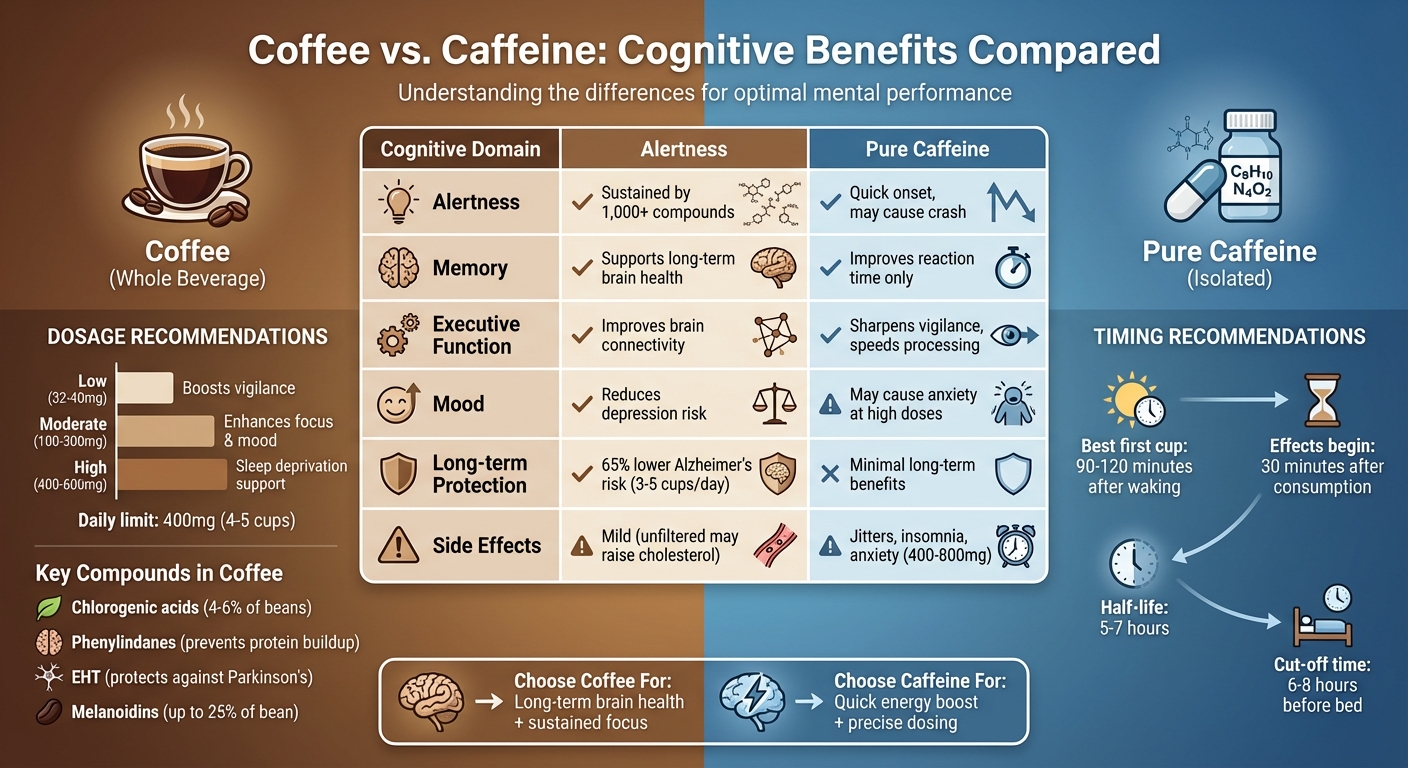
| Cognitive Domain | Coffee (Whole Beverage) | Pure Caffeine (Isolated) |
|---|---|---|
| Alertness | High; sustained by a mix of compounds | High; quick onset but often followed by a crash |
| Memory | Boosts working memory and may reduce long-term decline risk | Enhances reaction time; mixed results on memory consolidation |
| Executive Function | Improves brain connectivity and task-switching | Sharpens vigilance and speeds up processing |
| Mood | Enhances mood and reduces depression risk | Lifts mood in moderation; high doses may cause anxiety or jitters |
| Long-term Brain Health | Linked to lower risk of Alzheimer’s, Parkinson’s, and stroke | Offers some protection but less effective than coffee |
| Side Effects | Generally mild; unfiltered coffee can raise cholesterol | Can cause jitteriness, insomnia, or rapid heart rate at higher doses (400–800 mg) |
This table highlights the key differences, setting the stage for a deeper dive into their effects.
What the Comparison Shows
Coffee stands out for offering a wider range of cognitive benefits that last longer. Both coffee and pure caffeine are effective at boosting alertness, but coffee's unique blend of over 1,000 bioactive compounds helps improve brain function and provides protection against age-related decline [2][11]. On the other hand, pure caffeine is great for a quick mental jolt - perfect for fighting off fatigue or improving reaction time - but lacks the broader benefits coffee provides.
One of coffee's biggest advantages is its impact on long-term brain health, particularly in older adults. Research, including animal studies, shows that coffee’s combination of polyphenols and other compounds creates effects that caffeine alone simply can't match [2]. These compounds work together to support brain health in ways that isolated caffeine cannot replicate.
If you’re looking for a quick energy boost, both options can work. But for sustained cognitive benefits and long-term brain support, coffee clearly takes the lead. Whether you choose coffee or caffeine depends on your goals: a short-term pick-me-up or a more comprehensive approach to brain health.
What COFFEE Does to Your Brain
How to Use Coffee or Caffeine for Better Mental Performance
Coffee's ability to boost mental performance is well-known, but getting the most out of it requires paying attention to how much you consume, when you drink it, and even how you brew it.
Recommended Amounts for Mental Benefits
The key to unlocking coffee's mental perks lies in finding the right caffeine dose. A serving with 40–300 mg of caffeine can sharpen focus and improve mood. On the lower end, around 32–40 mg, you might notice better alertness and quicker reaction times. Moderate doses, between 100–300 mg, can enhance attention, elevate your mood, and keep you energized throughout the day. For most healthy adults, up to 400 mg daily (roughly 4–5 cups of coffee) is considered safe. However, pushing beyond this - into the 400–600 mg range - might help during sleep-deprived periods but could also lead to anxiety or jitteriness.
Interestingly, caffeine's effectiveness follows an inverted U-shaped curve: too little or too much won’t deliver the same benefits as a moderate amount. Overdoing it regularly (e.g., taking 150 mg three times a day) may even lead to slower reaction times due to neurocognitive adaptation [1][7][16].
| Dosage Level | Amount (mg) | Primary Cognitive Effects |
|---|---|---|
| Low | 32–40 mg | Boosts vigilance and improves reaction times [14][15] |
| Moderate | 100–300 mg | Enhances focus, mood, and daytime alertness [14][15] |
| High | 400–600 mg | Supports performance during sleep deprivation but may increase anxiety [14][15] |
The right dose is only part of the equation; timing matters too.
Best Times to Consume Coffee or Caffeine
When you drink your coffee can make a big difference in how it affects you. It’s best to wait 90–120 minutes after waking before having your first cup. Why? Cortisol levels peak about 30–45 minutes after waking, and drinking coffee during this time can lead to an energy slump later in the day [17].
Once consumed, caffeine takes about 30 minutes to kick in, improving alertness, reaction times, and decision-making abilities. If you're trying to avoid sleepless nights, stop drinking caffeine 6–8 hours before bed. Caffeine's half-life is 5–7 hours, meaning it lingers in your system long after that last sip. Research shows that consuming 400 mg of caffeine six hours before bedtime can cut your sleep time by over an hour. To maintain focus throughout the day without overdoing it, smaller doses - 20–40 mg every few hours - can provide a steady mental boost [4][17][18].
Beyond timing and dosage, the way you make your coffee also plays a role in maximizing its benefits.
Improving Your Coffee Brewing Setup
Believe it or not, your brewing setup can impact how much you benefit from your coffee. High-quality brewing equipment doesn’t just make your coffee taste better; it also helps extract bioactive compounds like chlorogenic acids, polyphenols, and trigonelline. These compounds offer neuroprotective benefits that go beyond caffeine alone [13][19]. Poor brewing methods, on the other hand, can reduce these beneficial compounds by up to 60%.
Brands like Fwing Coffee provide premium brewing tools designed to optimize your coffee experience. From pour-overs and French presses to precision grinders and kettles, their equipment gives you control over important variables like grind size and water temperature. For an extra boost, consider using lighter roasts - they tend to have more caffeine. With the right tools and high-quality beans, you’re not just brewing coffee; you’re creating a drink that supports both your short-term focus and long-term brain health.
Conclusion: Choosing Between Coffee and Caffeine
When deciding between coffee and caffeine, it all comes down to your goals and personal preferences. If you're looking for a quick boost in alertness to tackle tasks that require speed and sharp reactions, both options can do the job. However, pure caffeine supplements offer the advantage of precise dosing, which can help you avoid overstimulation and find your ideal balance [3] [4] [20].
On the other hand, if you're thinking about long-term brain health, coffee takes the lead. Studies suggest that drinking 3–5 cups of coffee daily during middle age is linked to a 65% lower risk of developing dementia and Alzheimer's later in life [2] [13]. This isn't just about caffeine - it's the combination of over 1,000 compounds in coffee working together. As Barbara Shukitt-Hale, Ph.D., from the USDA-ARS Human Nutrition Research Center on Aging, explains:
"The neuroprotective benefits seen with coffee in these studies appear to be not due to caffeine alone but instead to the polyphenols and other bioactive compounds in coffee." [2]
For older adults, coffee offers unique advantages that caffeine alone can't match. Research shows it can improve psychomotor coordination, working memory, and even reorganize brain connectivity to enhance executive function [2] [4] [13].
Personal factors also play a role. For example, people with ADHD might notice that caffeine has a calming effect, requiring careful attention to dosage [20]. Women may benefit more than men when it comes to coffee's protective effects against cognitive decline [21]. And if you're prone to side effects like anxiety, jitters, or trouble sleeping, keeping your caffeine intake moderate - up to 400 mg per day - is critical [12]. Ultimately, the choice between coffee and caffeine depends on your health needs, lifestyle, and how your body responds.
FAQs
How does coffee benefit long-term brain health compared to caffeine alone?
Coffee delivers more than just a morning energy boost - it offers long-term benefits for brain health that go well beyond caffeine's effects. Research has linked regular coffee drinking to a reduced risk of age-related cognitive decline, improved psychomotor skills, and better overall brain performance. This is thanks to the powerful combination of antioxidants, polyphenols, and other bioactive compounds in coffee, which work alongside caffeine to support brain health.
Studies also point to coffee’s potential in lowering the risk of neurodegenerative diseases such as Parkinson’s and Alzheimer’s. While caffeine provides that immediate jolt of alertness and mood improvement, the unique blend of compounds in coffee seems to enhance neural efficiency and provide lasting cognitive protection. It’s this intricate mix - not just the caffeine - that makes coffee a standout choice for supporting long-term brain function.
How does coffee improve cognitive function compared to caffeine alone?
Coffee does more than just wake you up - it gives your brain a real boost. Thanks to caffeine and other bioactive compounds, coffee enhances cognitive function in multiple ways. Caffeine increases alertness by blocking adenosine receptors, which helps improve reaction times. But the magic doesn’t stop there. Coffee is also packed with antioxidants, chlorogenic acids, and polyphenols. These compounds help reduce oxidative stress, promote brain health, and improve blood flow, creating a well-rounded benefit for your mind.
Research shows that coffee outperforms caffeine alone when it comes to improving attention, memory, and reducing fatigue. The combination of caffeine with these additional compounds works together to amplify their effects, providing both an immediate energy kick and long-term support for brain health. For older adults, drinking coffee regularly has even been associated with sharper cognitive performance and a lower chance of age-related mental decline.
What are the side effects of consuming too much caffeine?
Consuming too much caffeine can bring about insomnia, nervousness, a racing heartbeat, and digestive problems. It might also trigger anxiety, headaches, or leave you feeling jittery and restless.
To steer clear of these side effects, keep an eye on how much caffeine you consume daily and pay attention to how your body reacts. Striking a balance allows you to enjoy caffeine's perks without the unwanted discomfort.